
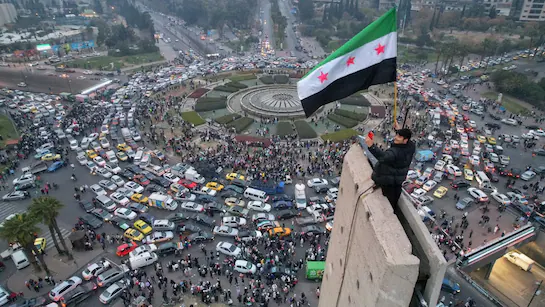
HOMS, Syria: A year ago, Mohammad Marwan staggered out of Syria’s infamous Saydnaya jail on the outskirts of Damascus, barefoot and confused, as opposition forces advancing on the capital flung open the prison’s doors to free its inmates.
The father of three, who was arrested in 2018 for evading mandatory military service, had already spent time in four other prisons before arriving at Saydnaya, a vast complex north of Damascus that came to be associated with some of the worst crimes carried out under the administration of now-ousted President Bashar Assad.
He remembered a series of beatings and electric shocks administered by guards who were waiting to greet fresh inmates. “You have no rights here, and we’re not calling an ambulance unless we have a dead body,” Marwan recalled. He was happy to return home on December 8, 2024, to a home full of family and friends in his hamlet in the province of Homs.
However, he has had difficulty overcoming the psychological and physical impacts of his six-year incarceration in the year that has passed. He experienced breathing difficulties and chest pain, which were later diagnosed as tuberculosis. He struggled to fall asleep and suffered from acute anxiety.
His physical and emotional conditions have steadily improved, according to Marwan, who is currently receiving treatment for tuberculosis and attending therapy sessions at a facility in Homs dedicated to rehabilitating ex-offenders.
Also Read:
Developing Leadership For A Better Future: ICTN Highlights Rima Awada Zgheib’s Impact
Dana Odeh: Empowering Ethical Fashion Through Rock N Shine