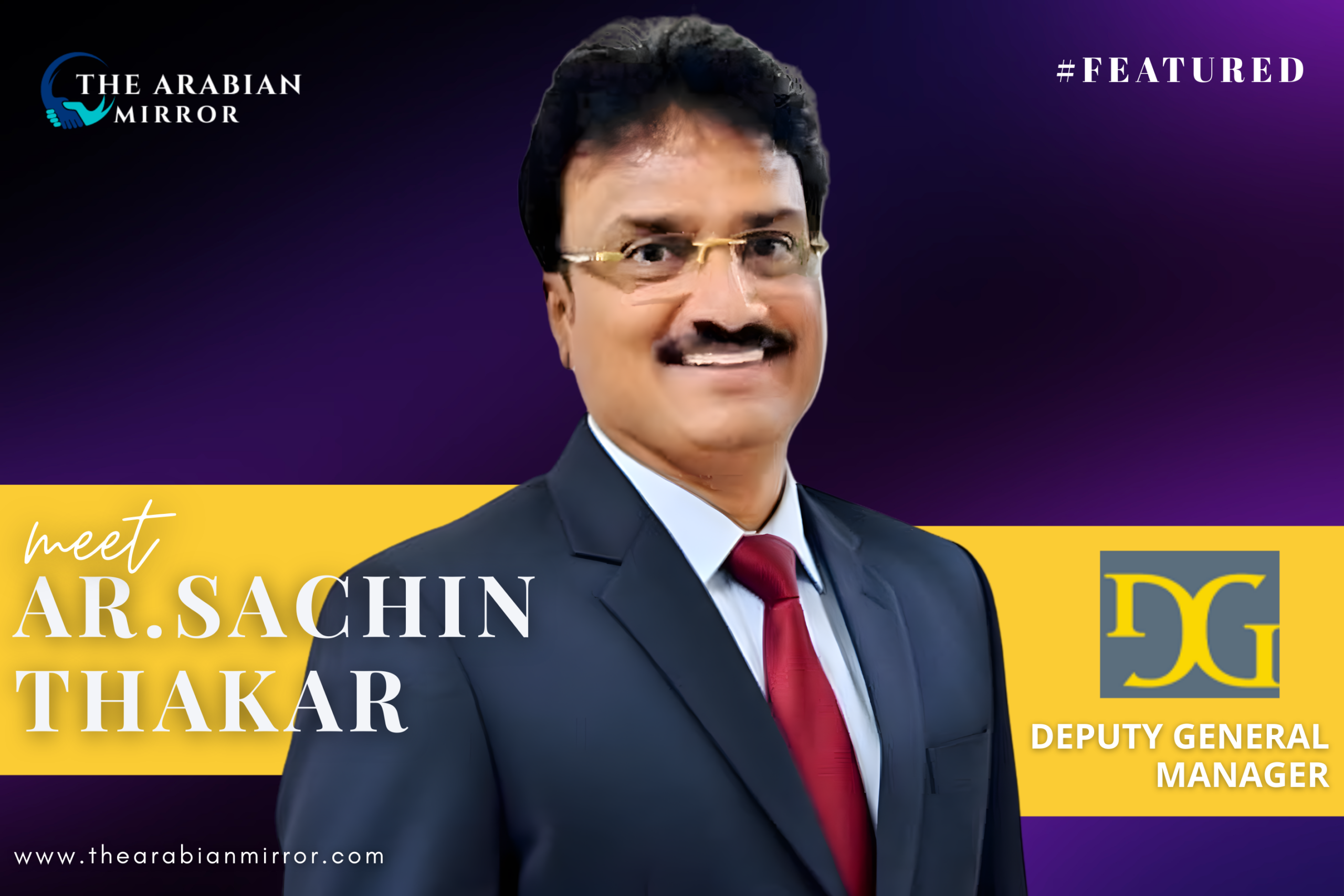

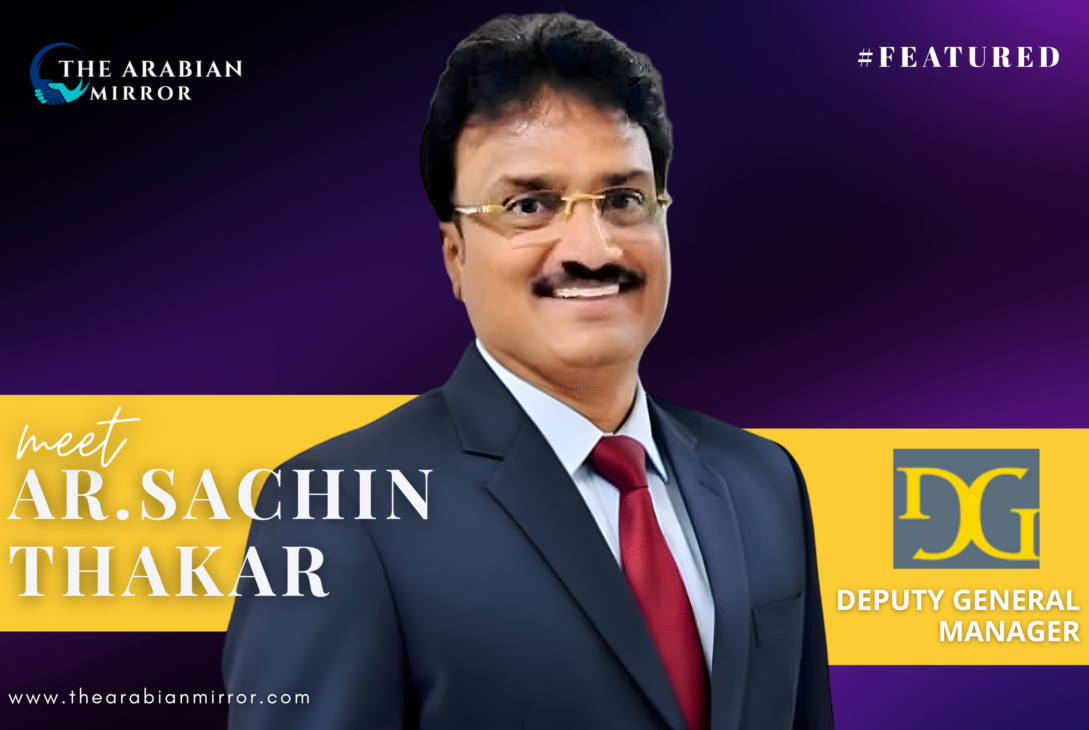
A seasoned architect with Project Management skills, Ar. Sachin Thakar, currently leads as the Deputy General Manager at Design Group Engineering Consultants. Bringing over three decades of diverse professional experience, he has delivered complex projects, led major developments across sectors, and guided teams throughout the years. A motivational speaker, coach, and trainer, Ar. Sachin Thakar’s work revolves around communication and leadership, as he consciously uses these strengths to empower his teams with confidence, clarity, and a sense of ownership.
Career Trajectory of Ar. Sachin Thakar
An architect by profession, Ar. Sachin Thakar began his career with independent practice in Akola, working on residential, commercial, apartment, and plot development projects for about 12 years. After moving to Pune, he worked with DSK Group as Head of the Planning Department, followed by a role as HOD–Planning at Gera Developments. In 2007, Sachin joined Envotech LLC in Dubai as a Client Representative for Al Nabooda Group.
Soon after, he relocated to Muscat and worked with Leeyana Engineering Consultancy as a Senior Project Manager. In 2012, Sachin joined the National Bank of Oman as Head of Projects and Facilities Management, and in the later years, he was associated with Engineering Innovation Design Consultancy, leading major developments including hospitality, retail, and mixed-use projects.
In 2025, Sachin took on his current role as Deputy General Manager at Design Group Engineering Consultants, where he oversees client relations, design strategy, and team leadership for a 70+ member team.
He reflects, “These 33 years of diverse professional experience have shaped my leadership journey and led me to my current role, where I focus on guiding teams, delivering complex projects, and sharing my experience and knowledge with the next generation of professionals.”
Adding Value to the Business
Sharing his everyday role at Design Group Engineering Consultancy, and the part of his work he finds most meaningful, Ar. Sachin mentions, “Daily, my role involves working closely with project teams and Heads of Departments to ensure smooth planning, coordination, and delivery across projects. I collaborate regularly with the Managing Director on strategic and operational matters, attend client meetings, lead discussions on project deliverables, and support new project pitches through presentations.
My routine also includes project progress reviews, internal coordination meetings, follow-ups, vendor and client management, and ensuring alignment between design, planning, and execution teams.”
The most meaningful part of his work, Ar. Sachin believes, lies in supporting and motivating people, as he genuinely enjoys mentoring teams, strengthening collaboration, and helping individuals perform their best.
Communication and leadership are at the core of how he works, and he consciously uses these strengths to build confidence, clarity, and ownership within the team. Much of this approach has been shaped by his learning and development through Toastmasters International, which has significantly enhanced his ability to lead, inspire, and connect with people across all levels of the organization.
Impact of Technological Advancements on the AEC Industry
Digital transformation and AI are significantly reshaping the architecture, engineering, and construction (AEC) industry—not only in how projects are designed, but also in how decisions are made, teams collaborate, and value is delivered to clients. Ar. Sachin shares, “At a technical level, tools like BIM modelling, AutoCAD, project scheduling platforms, and data visualization systems have moved the industry from traditional drawing-based workflows to integrated, data-driven environments. Solutions developed by companies such as Autodesk and Microsoft now allow multidisciplinary teams—architects, structural engineers, MEP consultants, and contractors—to work on a shared digital model (Aconex/Procore). This improves coordination, reduces design clashes, enhances accuracy, and ultimately saves time and cost during execution.
From a project management perspective, digital tools have brought greater transparency and predictability. Real-time dashboards, scheduling analytics, and performance tracking help leadership teams make faster and more informed decisions (PowerBI). Predictive planning is becoming more reliable, risks are identified earlier, and stakeholder communication has become more structured and measurable.
Artificial intelligence is adding another powerful layer. Platforms developed by organizations like OpenAI are supporting professionals in drafting communication, preparing reports, generating meeting minutes, analyzing data patterns, and even assisting in early-stage design ideation. This does not replace professional judgment, but it enhances efficiency and frees up time for more strategic and creative thinking.
The impact is also visible on client expectations. Clients today expect faster turnaround, visual clarity through 3D simulations, data-backed feasibility, and lifecycle thinking—not just design drawings. Digital tools enable us to present concepts more convincingly, evaluate alternatives quickly, and align business, design, and execution goals from the beginning.”
He even adds, “At a leadership level, the way I work has evolved as well. My role now involves encouraging teams to adopt digital-first workflows, promoting data-based decision-making rather than intuition alone, and building collaboration across distributed teams and consultants. Alongside these, upskilling professionals to stay relevant in a tech-driven environment is equally crucial.
In a deeper sense, digital transformation is not just about software—it is about mindset. It is pushing the industry from being reactive to proactive, from siloed working to integrated collaboration, and from experience-only decisions to experience supported by data.
AI and digital tools are, therefore, not replacing architects or engineers; they are amplifying our capabilities. They allow us to focus more on innovation, sustainability, stakeholder value, and human-centric design—while routine, repetitive, and documentation-heavy tasks become faster and more efficient.”
Adaptability Amidst Changes
Adapting to continuous change in the architecture and engineering industry requires a combination of mindset, skills, and real-world experience. The most important factor for Ar. Sachin has been maintaining an applied approach—learning not just theoretically, but by actively using new tools, processes, and systems in day-to-day work. He reflects, “An open mind toward learning and unlearning has helped me stay relevant as technologies, client expectations, and project complexities continue to evolve.”
Over the years, he has developed the ability to be both adaptive and productive at the same time. In a constantly changing industry, be it digital tools, AI integration, sustainability norms, or new delivery models—he emphasizes that the key is to respond with curiosity rather than resistance. This means continuously upgrading technical awareness, understanding new workflows like BIM-led coordination, and embracing data-driven decision-making instead of relying only on past practices.
Equally important has been leadership and communication. As roles become more cross-functional, success depends on aligning teams, consultants, and clients around a shared vision. Ar. Sachin’s journey with platforms like Toastmasters International has further strengthened his ability to articulate ideas clearly, motivate teams, and manage change with confidence, driving him to lead conversations, not just projects.
He mentions, “Experience has also taught me the value of learning agility and applying new tools and concepts, and people leadership as I guide teams through uncertainty and transformation. I have also honed strategic thinking by connecting technology with business outcomes, alongside focusing on collaboration by working across disciplines, cultures, and geographies. And resilience helped me stay steady and solution-focused during transitions.”
Growth in today’s environment is less about knowing everything and more about being willing to evolve. Ar. Sachin states that professionals who thrive are those who remain students throughout their careers—observing, adapting, experimenting, and improving continuously. This mindset has enabled him to not only adapt to change but also help others around me grow with it.
Words of Wisdom for Aspiring Professionals
Building a strong, future-ready career in architecture and engineering today requires a balance between technology, practical experience, and human understanding. Addressing the aspiring professionals in the field, Ar. Sachin shares, “While digital tools and AI are transforming the industry, they cannot replace on-ground knowledge, decision-making ability, and the wisdom that comes from real project exposure. Technology can guide, but experience teaches judgment.
Young professionals should focus first on developing strong fundamentals—understanding materials, construction methods, site realities, coordination challenges, and client expectations. Practical exposure builds confidence, and confidence builds leadership. The more you engage with real projects, the stronger your ability to solve complex problems becomes.
Equally important is people management. Our field is not only about drawings and designs; it is about working with teams, clients, consultants, contractors, and stakeholders from diverse backgrounds. The ability to listen, empathize, guide, and align people toward a common goal is a defining skill for long-term success. A human touch—understanding individual aspirations, motivations, and strengths—creates stronger teams and more sustainable organizations.
Professionals must also cultivate a learning mindset by staying curious and continuously upgrading skills as technologies evolve. Also, be open to new workflows, tools, and interdisciplinary collaboration, alongside focusing on transparent communication for building trust across teams. Additionally, to be a successful leader of tomorrow, take initiative, support others, and think beyond individual roles. And deliver with integrity, accountability, and long-term thinking.
Platforms such as Toastmasters International also play a vital role in shaping confidence, communication, and leadership—skills that are as critical as technical expertise in today’s environment.
A future-ready career is not built only on technical excellence. It grows from the ability to combine knowledge with wisdom, technology with human insight, and personal growth with organizational success. When professionals focus not just on ‘what I achieve,’ but also on ‘how I help others grow,’ they create lasting impact—for themselves, their teams, and the industry as a whole.”
Connect with Ar. Sachin Thakar on LinkedIn.
Find Design Group Engineering Consultants on LinkedIn and visit http://www.dgcon.com to learn more.
Also Read :-
Building Digital Excellence: Rojo Jose & Pentagon Information Technology
Anwar Husen Akbar Ali: Leading The Next Energy Revolution