
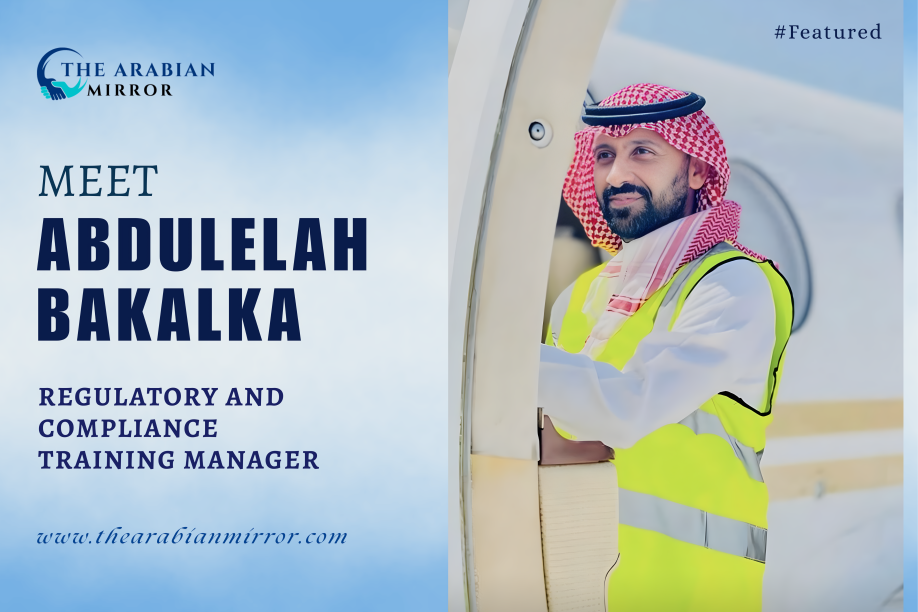
A Chartered MCIPD HR and Learning & Development leader, Abdulelah Bakalka brings over 15 years of experience in the field of aviation. With his work spanning across several HR functions, he specializes in building regulatory-compliant training and capability frameworks aligned with GACA and IATA standards, governance requirements, and organizational strategy. Currently leading as the Regulatory and Compliance Training Manager, he plays an instrumental role in transforming the HR solutions of the firm.
Recognized for his value-driven approach, Abdulelah Bakalka translates HR strategy, governance, and compliance into measurable outcomes supporting long-term organizational value.
Career Trajectory of Abdulelah Bakalka
With over 15 years of experience in Human Capital, Training, and Organizational Development within the aviation and engineering sectors, Abdulelah Bakalka’s career is supported by MCIPD membership and GRCP and GRCA certifications in governance, risk, and compliance.
Starting his career in HR strategy and workforce planning, with a focus on organizational design, manpower forecasting, and HR analytics, helped Abdulelah build a strong foundation in aligning people strategy with business and operational objectives. Later, he transitioned into HR operations and learning & development, where he managed end-to-end HR processes and coordinated operational and technical training programs.
Abdulelah Bakalka shares, “Over time, I specialized in training governance, regulatory compliance, and organizational development, leading large-scale transformation initiatives and designing in-house training programs for 350+ employees across 17 stations, generating SAR 4M+ in cost savings. I was authorized by GACA as a Post-Holder for Training (Part 151), accountable for regulatory compliance, audits, and authority liaison, and I was also delegated as HR & Administration Manager during leadership absences.”
These experiences led Abdulelah to his current role, where he focuses on enterprise-wide compliance and regulatory training, translating regulatory and risk requirements into practical training strategies, leading audits and inspections, and working closely with aviation authorities to ensure governance, operational readiness, and continuous improvement.
Daily Responsibilities at the Current Role
On a day-to-day basis, Abdulelah’s role sits at the intersection of regulatory compliance, training governance, and operational risk. He leads enterprise-wide training needs analysis, translates GACA, ICAO, and IS-BAH/IS-BAO requirements into clear, actionable training roadmaps, and oversees the design, delivery, and governance of both initial and recurrent training programs.
Abdulelah Bakalka also spent a significant part of his time on audit readiness and authority engagement — preparing for inspections, closing corrective actions, reviewing training records and instructor qualifications, and working closely with internal stakeholders to ensure compliance is not just documented, but embedded into daily operations. This includes executive reporting, risk assessments, and continuous improvement initiatives.
“The part of my work I find most meaningful is turning regulatory and compliance requirements into practical, value-adding solutions. When training actually improves operational performance, reduces risk, and builds confidence with regulators — rather than being a checkbox exercise — that’s where I see real impact. I’m especially motivated when I can build sustainable systems that strengthen governance, develop people, and leave the organization in a better position than before,” he reflects.
Adaptability Amidst Digital Transformation
Recent changes, particularly digital transformation and AI, are having a practical rather than disruptive impact on the aviation and regulatory training environment. Abdulelah adds, “Because aviation is a highly regulated industry, adoption is deliberate — but the direction is very clear.”
From a digital transformation perspective, Abdulelah’s work is moving away from manual, document-heavy processes toward integrated training and compliance systems. He strongly believes digital platforms allow better control of training records, qualifications, recurrent cycles, and audit evidence, improving traceability, data integrity, and inspection readiness, which is critical when dealing with authorities like GACA and ICAO. He even mentions, “In my work, digitalization has significantly reduced administrative effort and improved the quality of compliance oversight.
In terms of AI, its impact is currently more about decision support and analytics than automation of judgment. We’re starting to use data-driven insights to identify training gaps, risk trends, and compliance exposure, enabling more targeted Training Needs Analysis and smarter prioritization. AI also has potential in adaptive learning, scenario-based training, and predictive risk indicators — but within aviation, this must always sit under strong governance, validation, and human oversight.
Overall, these changes are reshaping the way Abdulelah works by shifting focus from manual control to intelligent oversight. His role increasingly involves ensuring that digital and AI-enabled tools are implemented in a way that supports compliance, enhances safety, and adds real operational value, while still meeting regulatory expectations and audit standards.
Navigating through the Dynamic Landscape
A combination of governance mindset, continuous learning, and hands-on operational experience has helped Abdulelah adapt and grow as the changes continue. Sharing his experiences, he reflects, “First, my background in governance, risk, and compliance — supported by MCIPD, GRCP, and GRCA — has been critical. It allows me to evaluate digital tools and AI initiatives through a risk-based lens, ensuring they enhance compliance and safety rather than introduce uncontrolled exposure. This perspective helps me adopt change confidently while staying aligned with regulatory expectations.
Second, I’ve developed strong data and systems literacy. I’ve worked directly with HR and training platforms such as SAP SuccessFactors, Odoo HR, and digital tracking solutions, and I’ve been involved in designing workflows, data structures, and reporting dashboards. This hands-on involvement helps me bridge the gap between operational users, IT teams, and leadership — which is essential in digital transformation.
Third, my experience leading large-scale change initiatives has strengthened my adaptability. Implementing in-house training programs across multiple stations, shifting from outsourced to internal delivery, and managing resistance to change taught me how to communicate clearly, influence stakeholders, and embed new ways of working sustainably.
Finally, I place strong emphasis on continuous professional development — staying current with regulatory updates, emerging technologies, and best practices. I actively translate new concepts into practical applications, ensuring that learning, technology, and compliance evolve together.”
These skills together allow Abdulelah not just to respond to change, but to shape it in a controlled, value-driven way that supports both operational performance and regulatory confidence.
Message for Aspiring Professionals
Sharing a few words of wisdom for professionals looking to build a strong, future-ready career in his field, Abdulelah Bakalka comments, “My main advice is to build depth before chasing titles or tools. In this field, credibility comes from understanding operations, regulation, and risk — not just systems or trends. Spend time learning how the business actually runs, how safety and compliance are enforced, and how decisions impact real operations.
Second, develop a governance mindset. Digital transformation and AI will continue to evolve, but professionals who understand risk, controls, and accountability will always be in demand. Certifications and frameworks matter, but what matters more is the ability to apply them pragmatically and proportionately.
Third, stay technically curious but operationally grounded. Learn digital tools, data analytics, and emerging technologies — but always ask how they improve safety, compliance, or performance. Technology should support judgment, not replace it.
Finally, invest in influence and communication skills. The most effective professionals in this space are those who can translate complex regulatory or technical requirements into clear, practical actions that people actually follow. The ability to engage regulators, executives, and frontline teams with the same confidence is a real differentiator.
A future-ready career in this field is built by being trusted, adaptable, and value-driven — not by reacting to every trend, but by choosing the ones that genuinely strengthen the organization.”
Connect with Abdulelah Bakalka on LinkedIn to gain industry insights.
Also Read :-
Omar Khan: Aligning Legal Strategies with Business Growth
Gaurav Sharma: Building Trenity Consultants as a Trusted Partner in The Immigration Landscape