
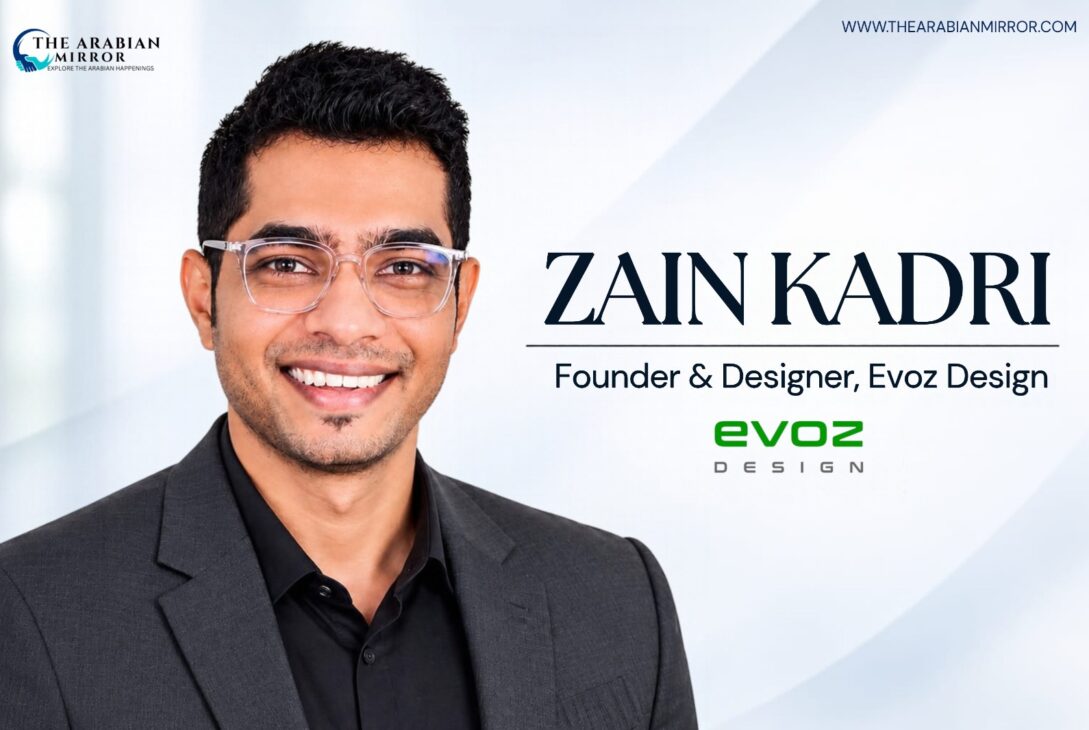
Bridging creativity, engineering, and innovation to shape the future of mobility and multidisciplinary design.
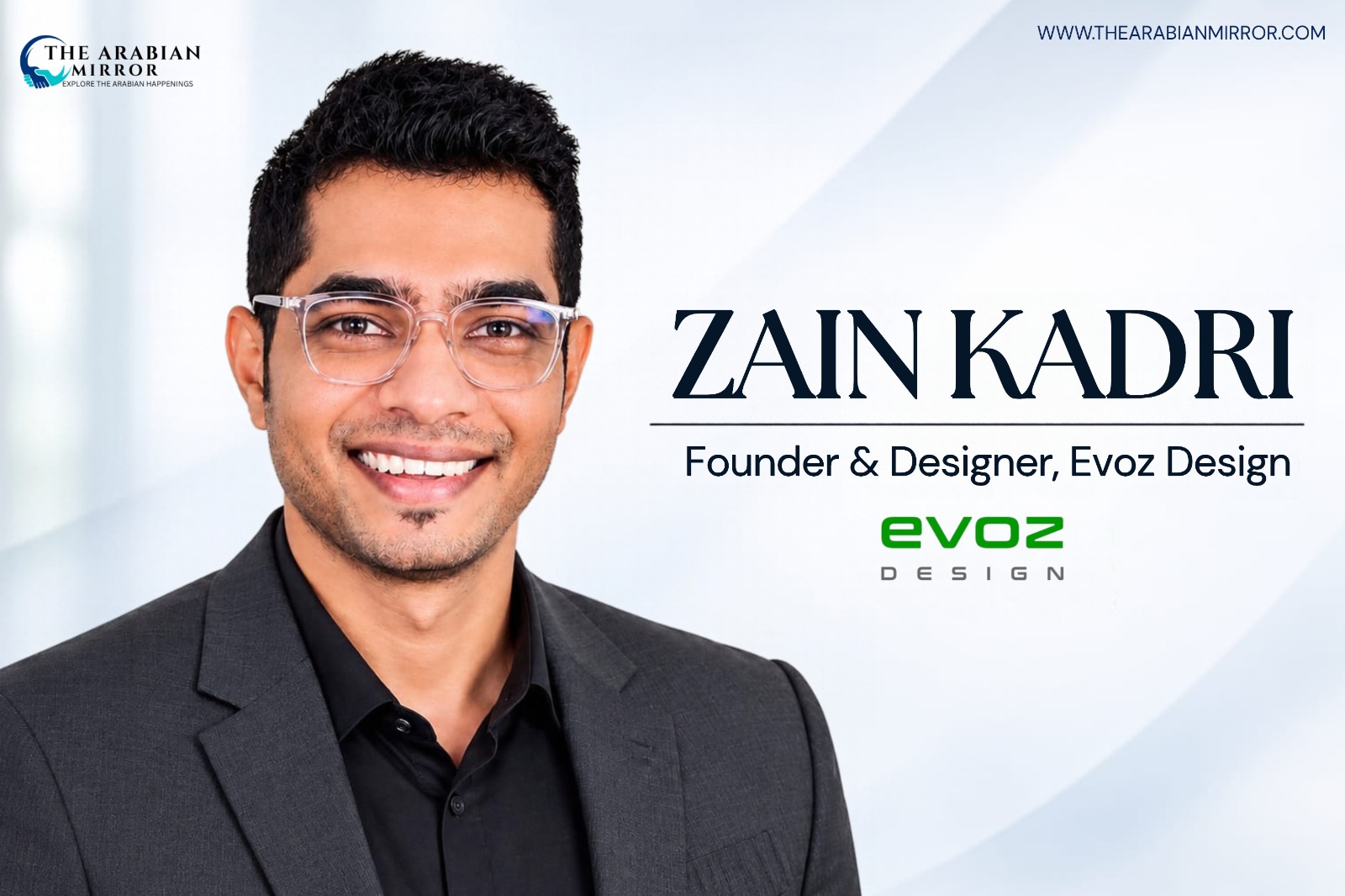
Design is not just about how a product looks. It is also about how it works, how people experience it and the problems it can solve. This thinking has shaped the journey of Zain Kadri, Founder of Evoz Design, a multidisciplinary design and innovation consultancy with operations in the UAE, India and China.
With nearly a decade of international experience, Zain has worked across automotive design, transportation, industrial products, furniture and interiors. His experience across different countries and industries has helped him develop an approach that brings creative thinking together with engineering and practical execution.
Through Evoz Design, he aims to connect these disciplines and help ideas move from early concepts to developed products. We spoke with him about his journey, the vision behind the company and the changing role of design in mobility and everyday life.
A Journey Across Design Disciplines
We began by asking, “Your design journey has taken you from the National Institute of Design in India to the Umeå Institute of Design in Sweden. What influenced your decision to pursue design, and how did these experiences shape your approach?”
Zain Kadri explained, “My interest in design came from a curiosity about how things are created and how they interact with people. I began my formal design education at the National Institute of Design in India, where I developed a foundation in furniture, interiors, materials and human-centred design.
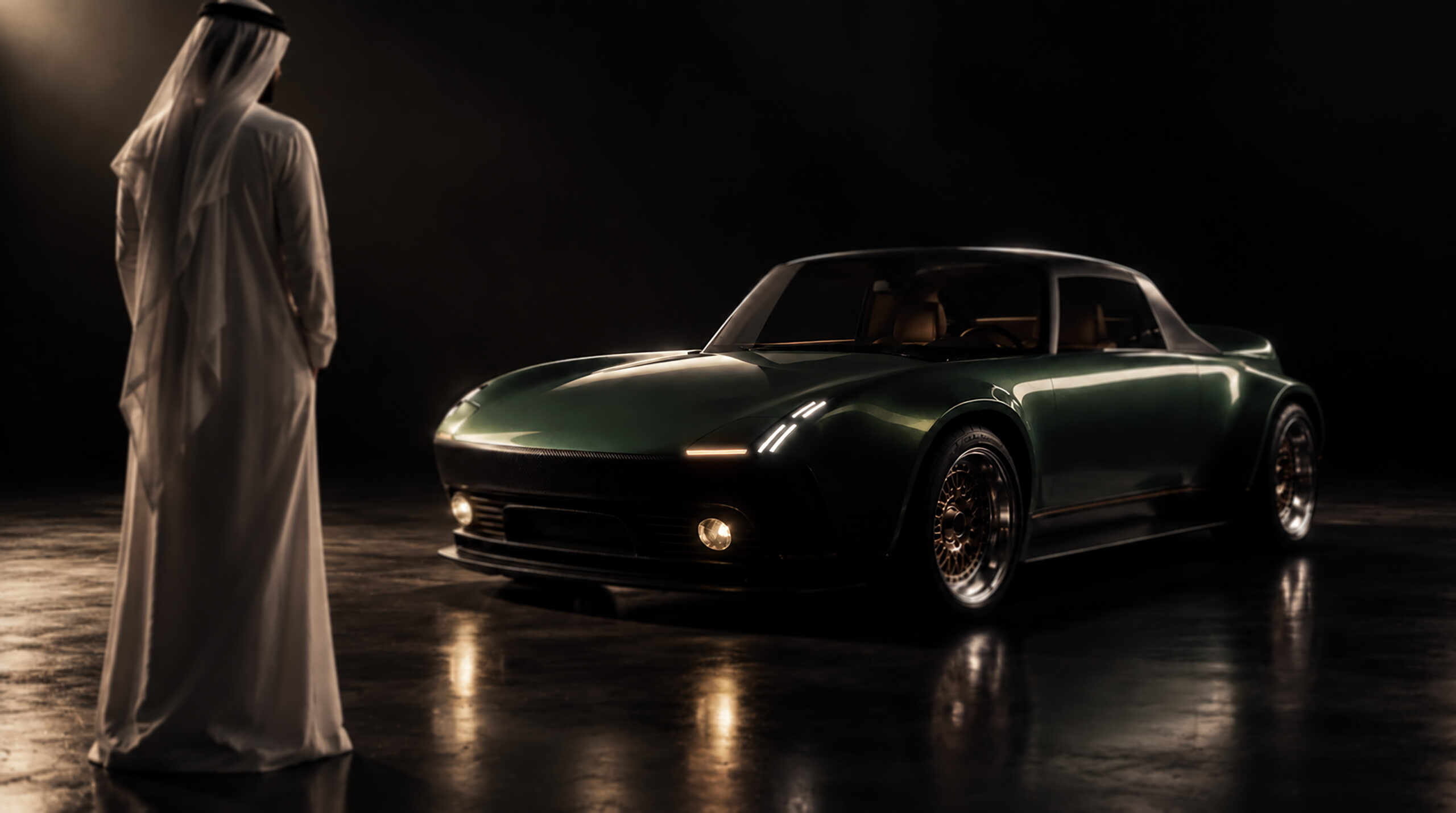
Porsche 914 restomod for private client.
My interest in automobiles and future mobility later led me to pursue a Master’s degree in Transportation Design at the Umeå Institute of Design in Sweden. This gave me the opportunity to explore mobility from a wider perspective and understand how design, technology and user experience come together.
Living and working across Europe, India and the Middle East also exposed me to different ways of thinking. I had the opportunity to engage with international automotive studios, OEMs and multidisciplinary teams. These experiences taught me that good design is not limited to one industry. It is about understanding a problem, questioning existing approaches and finding a solution that works.”
From Automotive Design to a Multidisciplinary Practice
Zain’s professional experience extends beyond automobiles to industrial products, furniture and interiors. We asked, “How has working across different design fields influenced your creative process, and what do you take from one discipline into another?”
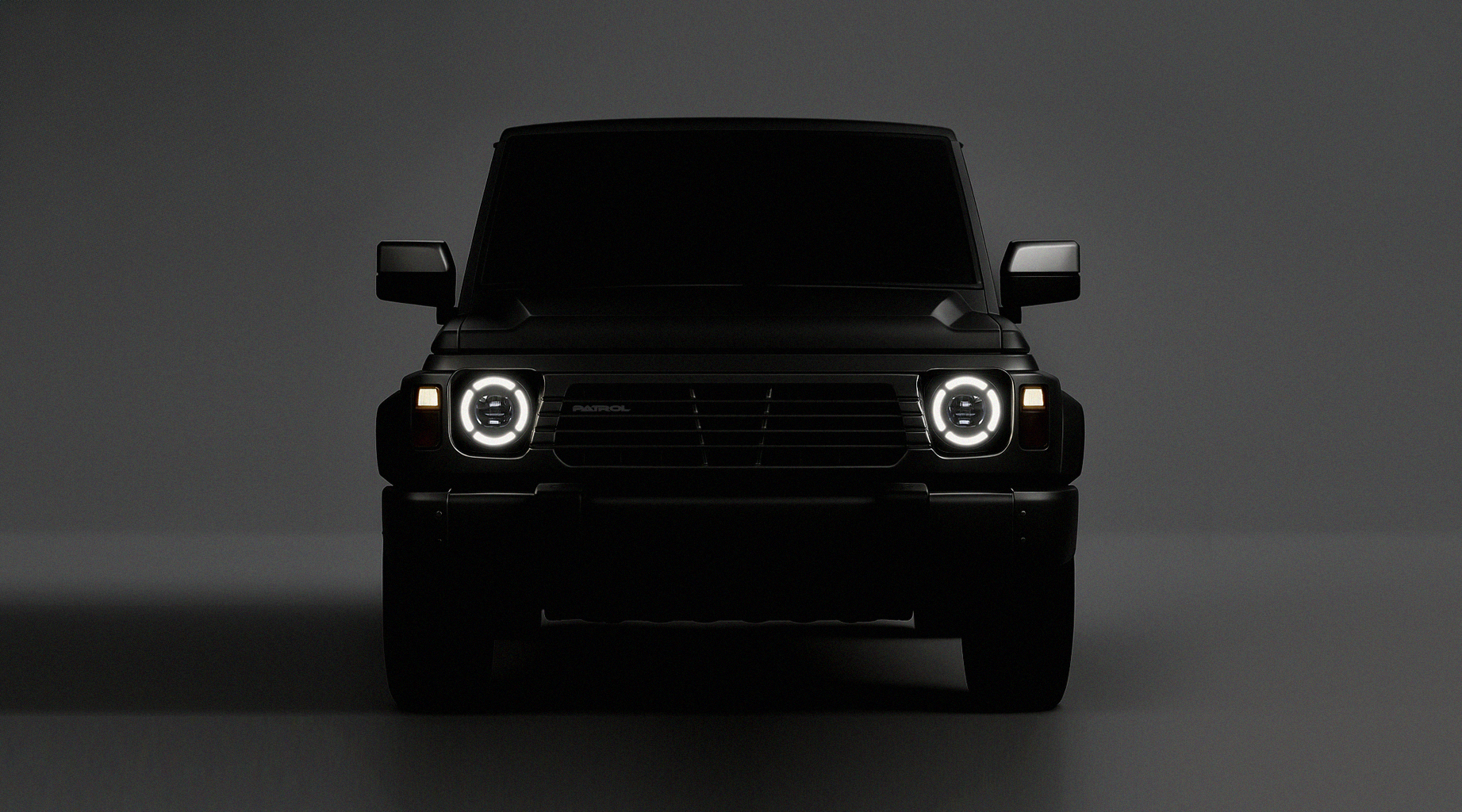
Bespoke restoration of UAE’s beloved Nissan Patil Y60
He shared, “Working across different disciplines has helped me look at design from more than one perspective. Automotive design, for example, requires a strong understanding of form, movement, proportion, materials and user experience. Furniture and interior design bring different considerations, but many of the same principles apply.
Each project presents a different set of challenges. Some require a strong focus on engineering and functionality, while others involve materials, ergonomics or the way people interact with a space or product.
I enjoy moving between these areas because it keeps my thinking open. An idea from one discipline can sometimes lead to a different solution in another. I believe this cross-disciplinary understanding is important, especially as industries become more connected.
For me, good design is not defined by a particular industry. It is defined by the ability to understand problems, challenge conventions and translate ideas into meaningful solutions.”
Evoz Design: Connecting Creativity With Execution
The inspiration behind Evoz Design came from Zain Kadri’s observation that design, engineering and prototyping often operate separately. We asked, “What gap did you see in the industry that led you to establish Evoz Design, and what kind of design practice did you want to build?”
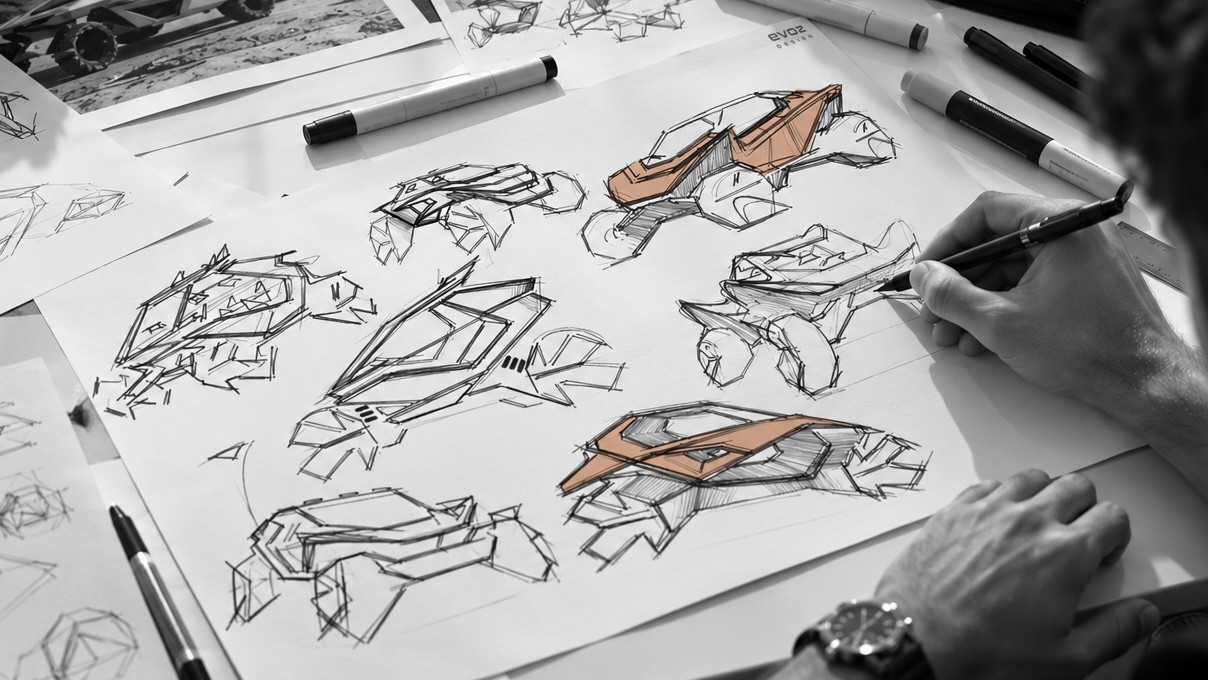
Ideation sketches as part of the design process
Zain noted, “I noticed that creative design, engineering and prototyping often work as separate stages. This can create gaps between what is imagined at the beginning and what can actually be developed.
I wanted to bring these disciplines closer together. Evoz Design was established with the idea of creating a collaborative environment where designers, engineers and innovators can work together from the early stages of a project.
Our work covers bespoke automotive and future mobility design, industrial product development, furniture and interiors, UI and UX, lifestyle accessories, engineering and prototyping. The idea is to help clients move from an initial concept towards a more complete and practical outcome.
I see Evoz Design as more than a traditional design consultancy. We want to become a development partner for businesses, manufacturers, technology ventures and individuals who are looking for thoughtful and unconventional solutions. The focus is on combining creative ambition with the technical understanding needed to bring ideas to life.”
Building Across the UAE, India and China
Evoz Design operates across the UAE, India and China, bringing together different markets and capabilities. We asked, “What opportunities do you see in working across these regions, and how do you bring their different strengths together?”
He explained, “Each region brings a different perspective and set of opportunities. The UAE has a growing innovation and business environment, while India has strong engineering and manufacturing capabilities. China also has an important role in product development and manufacturing.
I see value in connecting these capabilities rather than treating each market separately. Design ideas can be developed with an international outlook while drawing on the technical and production resources available across different regions.
The UAE is an important base for our work and our plans for international growth. We want to use this presence to connect with automotive manufacturers, businesses, technology ventures and other partners who are looking to develop new products and experiences.
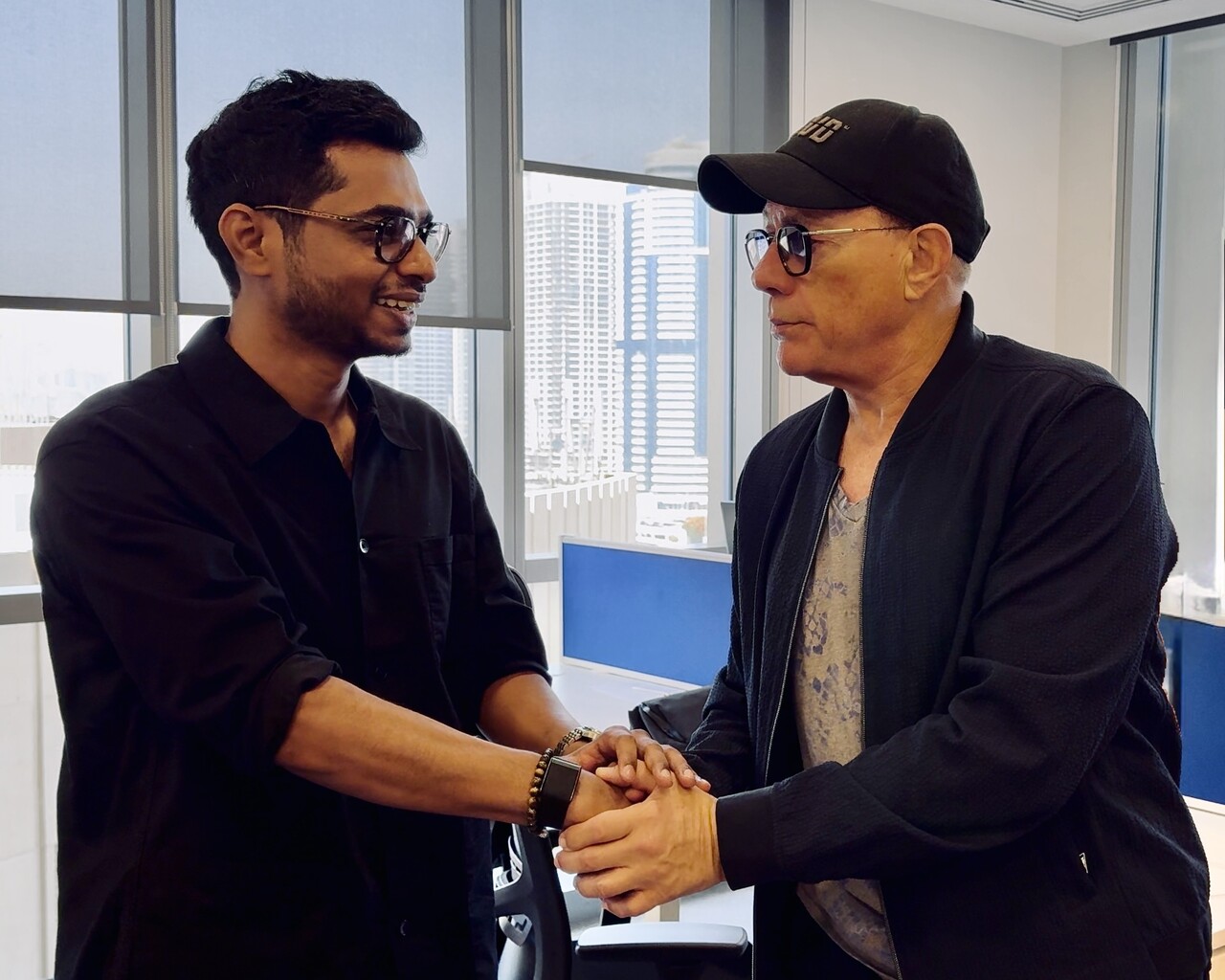
Zain Kadri with Jean Claude Van Damme
Working across different markets also requires an understanding of local expectations and practical requirements. That is something we take into account as we develop our projects and partnerships.”
Designing for People, Purpose and Sustainability
Whether working on a vehicle, an interior or an industrial product, Zain places importance on the people who will use it. We asked, “How do you balance aesthetics, functionality and sustainability when approaching a design project?”
Zain shared, “The starting point for me is always understanding the user. Before thinking about how something should look, we need to understand who will use it, how they will interact with it and what problem it is expected to solve.
A design should work well and feel right to the person using it. Functionality, visual appeal and sustainability should support one another rather than compete. A product may look impressive, but it also needs to perform reliably and make sense in everyday use.
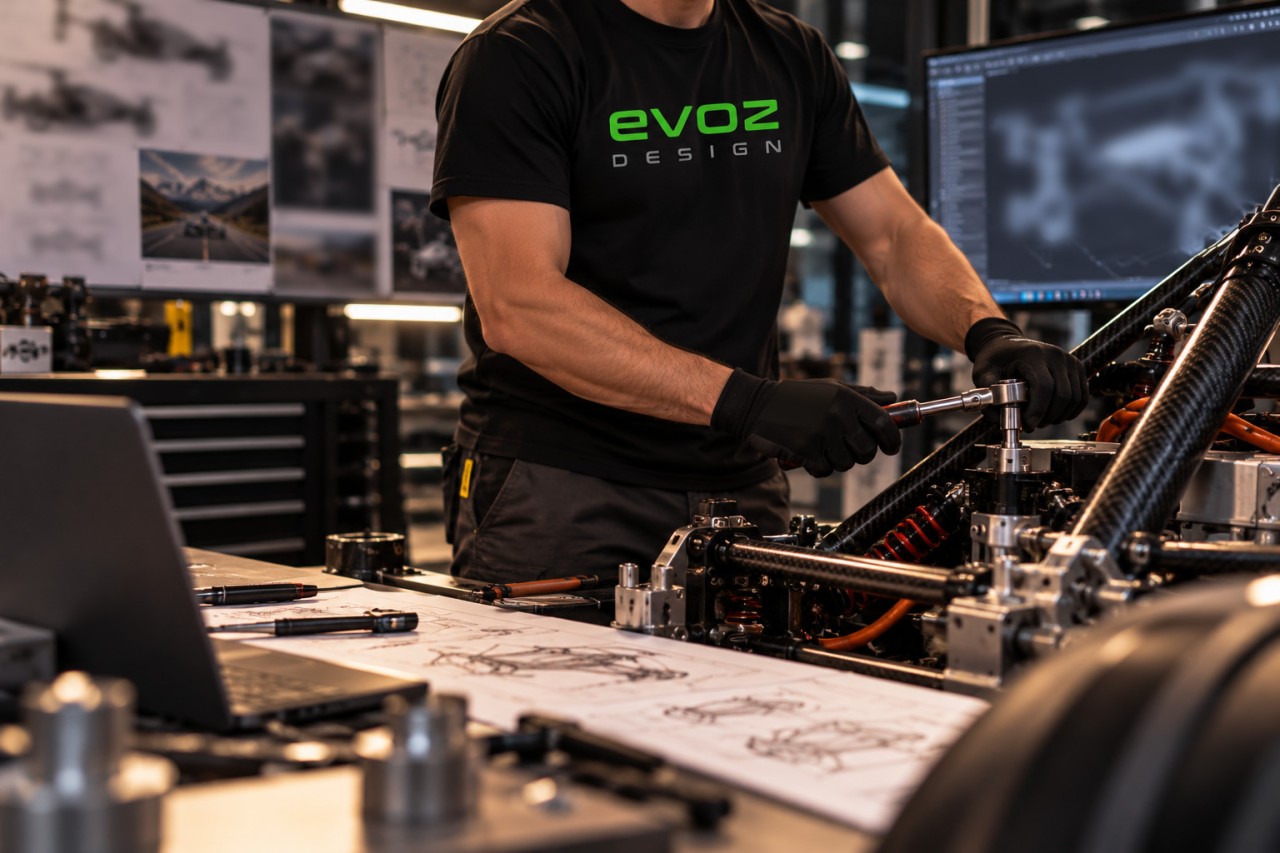
Evoz’s design meets fine engineering.
I also see sustainability as something that goes beyond choosing certain materials. Durability, repairability, responsible manufacturing and the use of existing resources all matter. A product that people value and maintain for years can have a different impact from one designed for short-term use.
My interest in automotive restoration and contemporary interpretations of classic vehicles also reflects this thinking. It is possible to respect the character of an existing design while exploring how modern technology and functionality can improve it. The goal is to create something that remains relevant over time.”
AI, Engineering and the Future of Design
Technology is changing how designers research, develop and test ideas. We asked, “How do you see AI, advanced manufacturing, electrification and autonomous mobility influencing the future of design?”
He responded, “Technology is changing the design process at many levels. AI can help with research, concept generation, visualisation and design optimisation. Advanced manufacturing is also creating new possibilities in how products and components can be developed.
In mobility, electrification and autonomous technologies are changing the way we think about vehicles. Designers are no longer looking only at exterior styling or interiors. They also need to consider new user experiences, vehicle architecture, functionality and the relationship between people and technology.
I see AI as a tool that can help us explore ideas faster and work through different possibilities. However, human creativity and technical judgement remain important. A design still needs a clear purpose, an understanding of the user and a realistic path towards development.
As these tools become more advanced, I believe designers will spend more time identifying problems, making informed decisions and connecting creative ideas with engineering requirements. Technology can expand what we create, but we still need people to decide what is worth creating.”
Advice for the Next Generation of Designers
With experience across international markets and several design disciplines, Zain has seen how the expectations of the industry are changing. We asked, “What qualities should young designers develop to build a career in an industry where creative thinking and technical knowledge are becoming increasingly connected?”
Zain reflected, “I would encourage young designers to remain curious and open to learning. Design is changing, and the ability to work across disciplines is becoming increasingly valuable.
It is important to develop creative skills, but designers should also understand materials, engineering, manufacturing and the practical requirements of bringing a product to market. An idea becomes more valuable when you understand how it can be developed and used.
I would also encourage designers not to limit themselves too early. Exploring different industries can help build a wider perspective and lead to unexpected opportunities. Collaboration is equally important because many interesting projects involve people with different areas of expertise.
Curiosity, adaptability and the ability to connect creative thinking with practical execution are qualities I believe will remain important throughout a designer’s career.”
Looking Ahead: Building a Global Design and Innovation Practice
Lastly, we asked Zain about his plans for Evoz Design and the kind of work he hopes to pursue in the coming years: “What is your long-term vision for Evoz Design, and what would you like the company to contribute to the future of mobility and multidisciplinary design?”
He concluded, “My vision is to develop Evoz Design into an internationally recognised design and development studio. I want us to take on projects that bring together design, technology and engineering across different industries.
Future mobility will remain an important area of interest. I would also like to see us contribute to industrial product development, sustainable products, advanced engineering and new technological experiences.
There is also a strong interest in working on projects that challenge conventional thinking. This could involve reimagining iconic automobiles, developing experimental mobility platforms or exploring new approaches to transportation.
Another important part of the journey is building a collaborative environment for designers and engineers. I want Evoz Design to encourage people to think independently, share ideas and explore possibilities beyond the usual boundaries of their disciplines.
For me, success is not measured only by the number of projects completed. It is also about the value those projects create and the ideas they leave behind. Design has no fixed boundaries. With curiosity, courage, technical understanding and the right collaborative spirit, ambitious ideas can become reality.”
LinkedIn | Evoz Design | Website
Also Read:
5 Secrets to Effective SEO in the Middle East
Driving Excellence in Marketing: Dr. Sobhi Sulieman Agha’s Journey