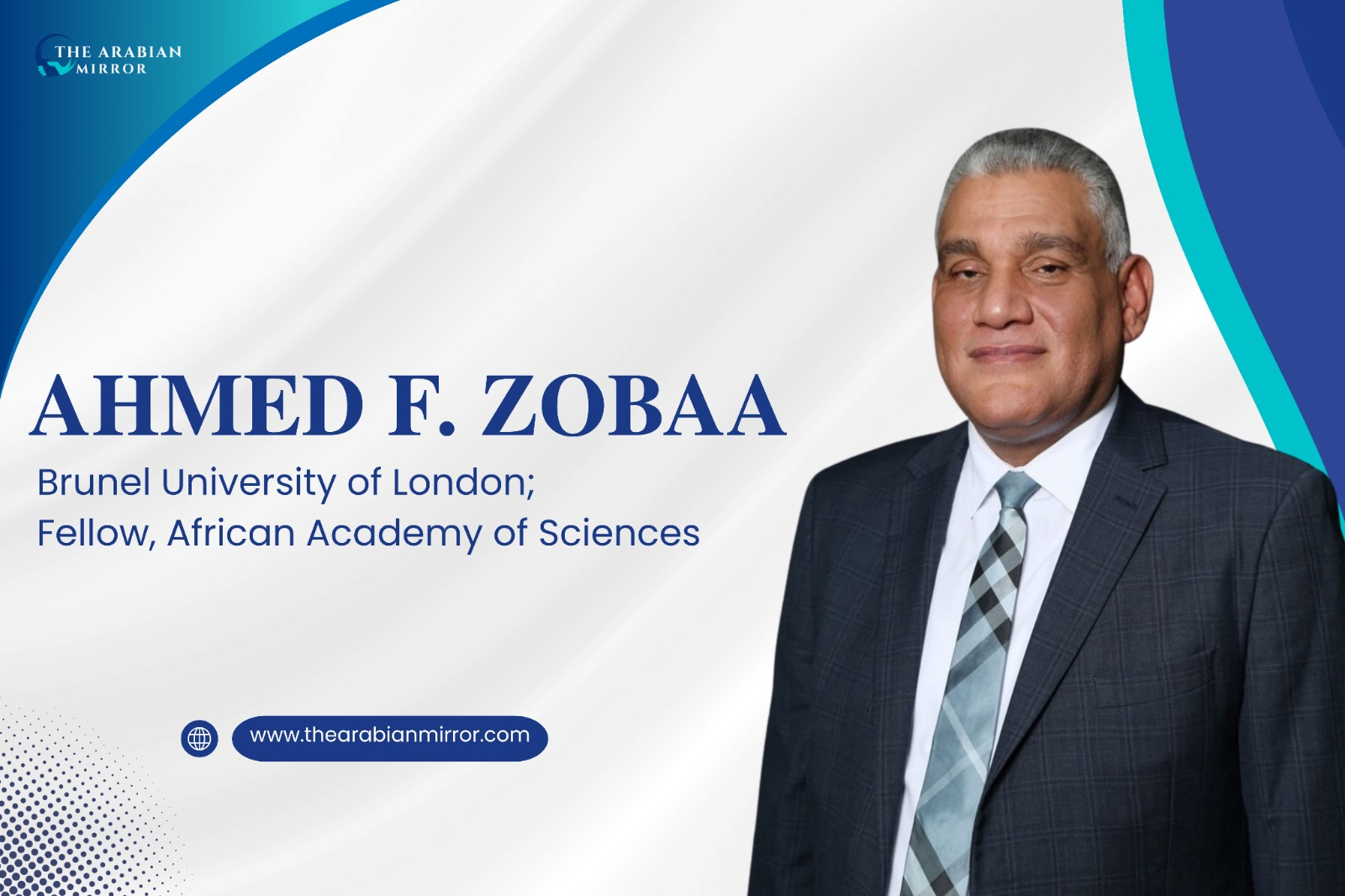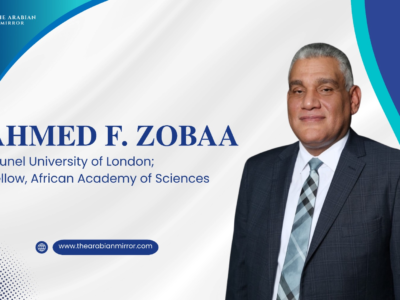

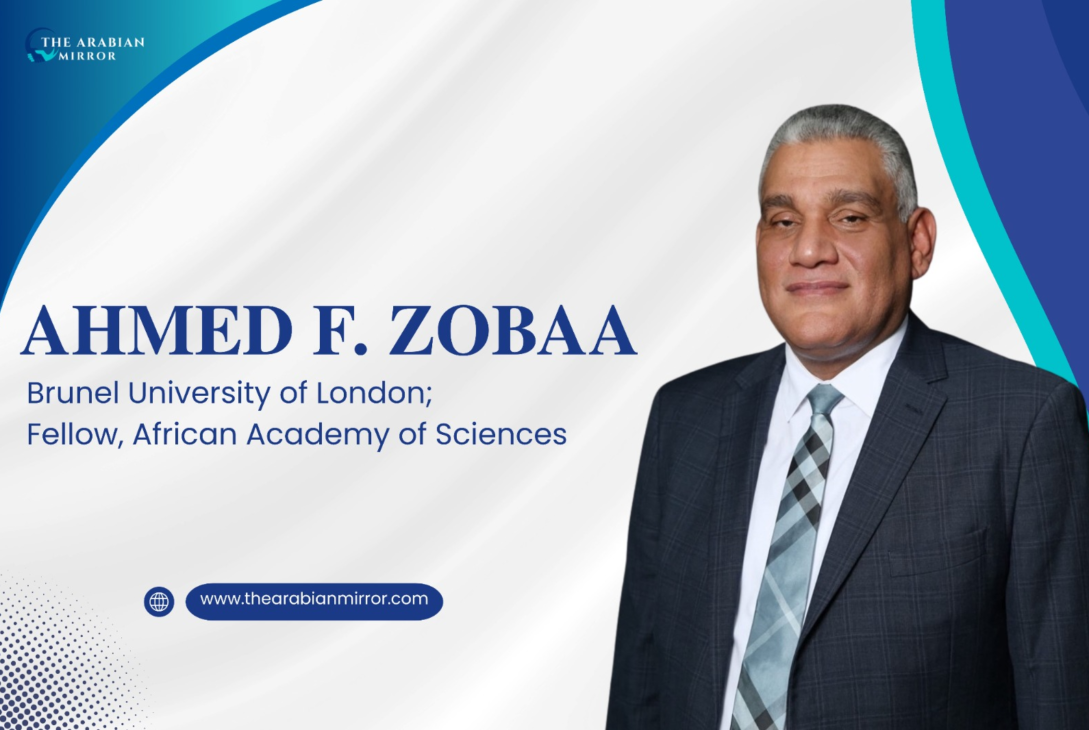
The global power sector is undergoing a rapid transformation, driven by decarbonization, electrification, and digitalization. An academic, researcher, and scientific leader, Professor Ahmed F. Zobaa focuses his work on the future of sustainable electricity systems and the practical challenges of the global energy transition.
Highlights
- First systematic review of Hosting Capacity research, drawing on more than 140 publications (Renewable Energy, 2019)
- Review cited in an Ontario Independent Electricity System Operator white paper (2020) and US Environmental Protection Agency guidance (2022)
- Two Brunel Public Policy Briefs on Hosting Capacity and grid connection reform (2024, 2026), aligned with Ofgem’s ED3 requirements for Hosting Capacity visibility and data sharing
- Written evidence quoted by the House of Lords Industry and Regulators Committee (2025)
Building Resilient Systems
Throughout his career, Professor Zobaa has focused on making power systems more resilient and reliable as they integrate increasing shares of renewable energy. A central theme of his work is Hosting Capacity: the maximum amount of distributed generation and other distributed energy resources that a network can accommodate without violating its operational limits, such as voltage, thermal loading, power quality, and protection.
His key publication in this area is the review “State-of-the-art of hosting capacity in modern power systems with distributed generation,” published in Renewable Energy in 2019. Drawing on more than 140 publications, it offered the first systematic and extensive overview of Hosting Capacity research, covering its historical development, performance limits, perceptions, and enhancement techniques. Co-authored with Sherif M. Ismael, Shady H. E. Abdel Aleem, and Almoataz Y. Abdelaziz, the publication has become an important reference in this field. Its central conclusion continues to shape his work: success in integrating more distributed generation hinges on accurate Hosting Capacity assessment.
Beyond Academic Papers
Rather than limiting his research to academic publication, Professor Zobaa has been translating engineering evidence into policy and practice. This has included the development of two Brunel Public Policy Briefs: “Hosting Capacity Assessments for Optimising the UK Energy Grid” (2024) and “From Connection Queues to Strategic Hosting Capacity” (2026).
Presenting the implications in a way that connects directly with current system challenges, the 2026 brief sets out how advanced Hosting Capacity methodologies can support grid connection reform, regional energy planning, and better use of existing network assets.
His research has also reached policymakers on both sides of the Atlantic. In 2020, Ontario’s Independent Electricity System Operator in Canada drew on his 2019 review for definitions of Hosting Capacity, assessment approaches, and enhancement techniques in its white paper on expanding the participation of distributed energy resources in its markets. In 2022, the US Environmental Protection Agency cited the same review when explaining Hosting Capacity Analysis in its “State Energy and Environment Guide to Action: Maximizing Grid Investments,” a resource for state policymakers and utility regulators. In the UK, the House of Lords Industry and Regulators Committee quoted his written evidence in its 2025 report “Power struggle: Delivering Great Britain’s electricity grid infrastructure” when considering grid connections reform.
From Better Information to Efficient Connection
From Professor Zobaa’s viewpoint, Hosting Capacity can make a major contribution to reducing grid connection queues, but it is not the only solution.
He states, “If Hosting Capacity is assessed using sufficiently detailed and regularly updated network information, developers can have better visibility of where constraints exist and where connections may be easier to accommodate.
“Network operators can also identify what is actually limiting capacity. That distinction matters because a network constraint does not automatically mean that conventional network reinforcement is the only solution.
“Hosting Capacity can sometimes be increased through energy storage, flexible connections, active network management, Volt/VAR optimization, network reconfiguration, demand flexibility and other operational measures.”
He believes the focus should be on how existing network capacity can be unlocked efficiently and intelligently, rather than assuming reinforcement is always required.
Diverse Leadership Roles
Alongside driving excellence in energy systems, Professor Zobaa brings equal commitment to his academic leadership roles. Guided by a vision of stronger research communities across Africa, he is a Fellow of the African Academy of Sciences.
Professor Zobaa has also served as Chair of the Academy’s Nominations and Elections Committee and as Chair of the African Research Initiative for Scientific Excellence (ARISE) Scientific Advisory Committee. As a strong advocate for the development of higher education, he also offers his insights as a Principal Fellow of the Higher Education Academy.
Looking Forward
Professor Zobaa envisions Hosting Capacity becoming a more transparent and consistent part of grid planning and connection decisions. UK regulation is moving in this direction: Ofgem’s ED3 Business Plan Guidance (2026) requires distribution system operators to improve visibility of Hosting Capacity on their low-voltage networks and to share Hosting Capacity data with the National Energy System Operator (NESO) and other parties, an approach his policy briefs have advocated. His vision builds on a point made in his 2019 review: Hosting Capacity is not a single value calculated once, but should be reassessed regularly, account for uncertainty, and reflect how capacity varies from one location to another across the network.
Across his roles, Professor Zobaa’s approach has always been guided by a long-term vision. As he continues to explore intelligent, flexible power systems dominated by renewable and inverter-based resources, he ensures his work contributes to a better tomorrow.
Connect with Professor Ahmed F. Zobaa on LinkedIn to gain industry insights.
Also Read:-
Shaping The Future Of Efficient Energy | Bryan Strohm
Shaping The Future Of Real Estate: The Inspiring Journey Of Adam Baskind