
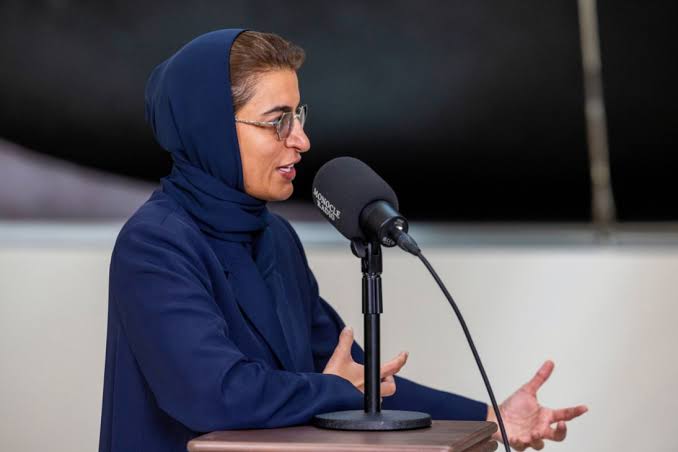
According to Minister of State Noura Al Kaabi, the UAE faced an unprecedented challenge during Iranian attacks, having to react not just to aerial strikes but also to a deluge of fake news, disinformation, and AI-generated content on the internet since the war started.
Speaking at the Arab Media Summit’s “Media and Diplomacy in a Changing World” session, Al Kaabi stated that the attacks posed two concurrent threats, making information’s legitimacy and timeliness more crucial.
We experienced this for the first time in our history,” Al Kaabi remarked, alluding to the assaults on the United Arab Emirates. She noted that in addition to dealing with what was happening in real life, the nation needed to address what was shown on screens, such as fake news, false information, misinformation, and malinformation. According to her, the problem has grown more complicated because of the rapid advancement of artificial intelligence and other technologies that can hasten the spread of misleading information.
Al Kaabi cited an MIT study to support his claim that misleading information can spread far more quickly than accurate information, making the problem even more difficult when AI technologies can create and distribute content quickly.
At this point, we need presence, assessment, and speed all at once,” she stated. Responding to false information is therefore not just a communications problem but also a security one for governments and institutions, she said.
Also Read:
Parth Das, The Warren Buffett Of Video Gaming
Heart Over Hype: Nils Ehle On What AI Transformation Actually Requires