
Each generation faces a unique set of obstacles. Previous generations’ aims included inventing convenience, reconstructing economies, increasing education, and improving public health. Climate change, resource scarcity, biodiversity loss, inequality, fast urbanization, and technological transition are some of the more linked concerns facing the world today. These challenges cut across borders, sectors, and governments, requiring unprecedented levels of collaboration.
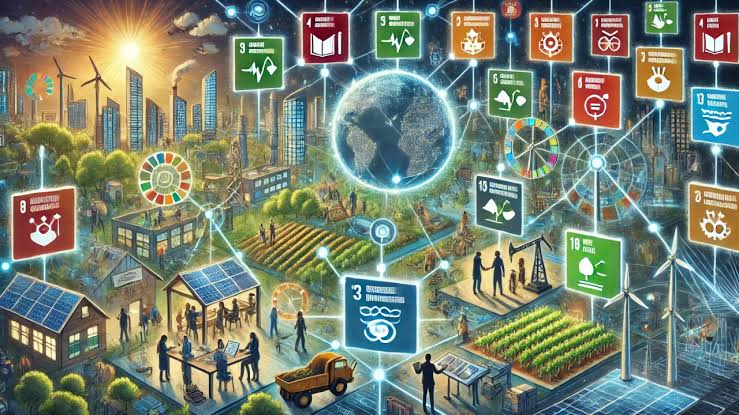
Recognising this, the United Nations approved the Sustainable Development Goals (SDGs) in 2015, establishing 17 global goals with a common vision for a more sustainable future. They work together to address some of the world’s most critical environmental, social, and economic concerns, recognizing that no single government, business, or community can accomplish long-term success on its own.
Perhaps the greatest strength of the SDGs is not the goals themselves, but the ideology that underpins them. They understand that sustainability is more than just an environmental, economic, or social concern. Clean energy improves economic resilience. Responsible consumption affects biodiversity. Quality education promotes innovation. Effective governance strengthens communities. development in one area supports development in another, resulting in a system in which long-term prosperity is determined by the balance between environmental stewardship, social inclusiveness, and economic growth.
For firms, this has profoundly altered how success is assessed. Organizations are increasingly expected to comprehend the impact of their decisions on employees, communities, supply chains, and the environment. Investors assess environmental, social, and governance (ESG) performance alongside financial success. Customers demand responsible brands.
Also Read:
João A F Pessoa’s Vision in Driving Success across Large-Scale Projects
James Bejjani’s Visionary Journey In Finance And Investments