
If you’ve sat through a marketing pitch in the last couple of years, you’ve probably heard the phrase “AI marketing” thrown around a dozen times without much explanation of what it actually means. It’s become one of those terms that gets attached to everything from a simple email automation tool to a full predictive analytics platform, which makes it genuinely confusing for business owners trying to figure out if it’s worth their money.
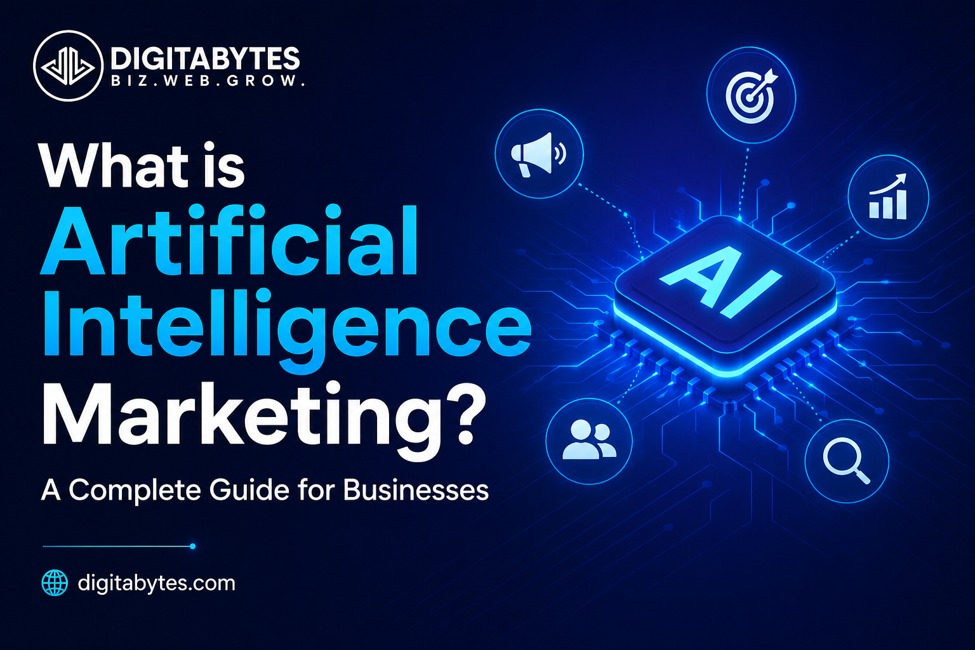
The short version: artificial intelligence marketing means using machine learning and data analysis tools to make marketing decisions faster and more accurately than a person could alone. That’s it. No magic, no mind-reading algorithms. Just software that processes large amounts of data and spots patterns humans would take much longer to find.
This guide breaks down what that actually looks like in practice, where it helps, and where it doesn’t.
The Basic Idea Behind AI Marketing
Marketing has always depended on data — who’s buying, when they buy, what convinces them, what turns them away. The challenge was never collecting that data. Most businesses have more of it than they know what to do with. The challenge was processing it fast enough to act on it.
AI marketing tools solve that processing problem. They take in customer behavior, ad performance, website activity, and purchase history, then identify patterns a human analyst might miss or take weeks to notice. A marketer still decides what to do with those patterns. The AI just gets them there faster.
Common Types of AI Marketing Tools
Predictive Analytics
These tools look at historical data to forecast what’s likely to happen next — which customers are close to making a purchase, which ones are likely to churn, or which product is about to see a demand spike. Retailers use this constantly to plan inventory and target promotions before demand actually hits.
Personalization Engines
You’ve experienced this one directly. When an online store shows you products based on what you’ve browsed before, or an email campaign sends different content to different segments of a list, that’s a personalization engine at work. It’s built on behavioral data, not guesswork.
Chatbots and Conversational Tools
Early chatbots were frustrating because they followed rigid scripts. Modern versions handle natural language much better, answering common customer questions and routing complex issues to a human agent. They don’t replace customer service teams — they filter out the repetitive questions so the team can focus on harder problems.
Ad Bidding and Optimization
Platforms like Google Ads and Meta Ads have built machine learning into their bidding systems for years now. These systems adjust bids in real time based on the likelihood of a conversion, something that used to require constant manual monitoring.
Content and SEO Tools
AI tools can analyze search intent, flag content gaps, and identify which topics are worth covering based on actual search demand. They’re useful for research and planning. They’re not a replacement for a writer who understands the audience and can shape a message that actually persuades someone.
What AI Marketing Is Not
This part matters just as much as the definition itself. AI marketing isn’t a system that runs your entire strategy without human input. It doesn’t understand brand voice on its own, and it can’t make judgment calls about tone, timing, or cultural context the way an experienced marketer can.
It also isn’t a guarantee of results. A poorly planned campaign with AI tools bolted on is still a poorly planned campaign. The tools are only as useful as the strategy guiding them.
How Businesses Actually Use AI Marketing Day to Day
For a small or mid-sized business, AI marketing usually shows up in a few practical ways rather than some sweeping transformation:
- Email campaigns that automatically adjust send times based on when each subscriber is most likely to open them.
- Ad campaigns that shift budget toward better-performing audiences without someone manually checking every hour.
- Website tools that show different content or offers based on a visitor’s behavior on the site.
- Customer support that handles routine questions instantly, freeing up staff for more complex requests.
None of these require a massive budget or a dedicated data team. Most are built into standard marketing platforms already, which is part of why AI marketing has become so common even among smaller businesses.
Where the Confusion Comes From
Part of the reason “AI marketing” feels so vague is that agencies and software companies use it as a catch-all term for anything involving automation or data analysis. Some of that is legitimate machine learning. Some of it is just basic automation with an AI label attached because it sounds more appealing.
A useful way to cut through this: ask what specific problem a tool or service solves, and how it makes that decision. If the answer is vague, it’s probably more marketing language than substance. If someone can explain the actual data being used and the decision being made, that’s a real AI application.
Is AI Marketing Worth It for Your Business?
For most businesses already running digital campaigns, the honest answer is yes, at least in some form. Faster testing, better targeting, and clearer reporting tend to save money over time, even for a modest advertising budget. The bigger question isn’t whether to use it, but how much of it makes sense for your size and goals.
A large ecommerce brand might benefit from a full predictive analytics setup. A local service business might only need smarter ad targeting and automated email follow-ups. Scale matters here more than most marketing pitches let on.
The Bottom Line
Artificial intelligence marketing isn’t a mysterious black box, and it isn’t a shortcut to guaranteed growth either. It’s a set of tools that help process data faster and spot patterns sooner, which lets marketers make better decisions with less guesswork. The businesses getting real value from it are pairing these tools with people who know how to interpret the results and adjust strategy accordingly.
If you’re evaluating whether an agency’s AI claims hold up, the best approach is asking specific questions about what tools they use and what problem each one solves. That conversation usually tells you more than any pitch deck will.
Digitabytes works with businesses to apply these tools in a practical way rather than as a buzzword. You can see recent work and client feedback on LinkedIn or Google, and if you’d like to talk through what this could look like for your business, you can reach out here.
Still unsure how AI marketing applies to your specific business? That’s a conversation worth having before spending on any tool or agency. Contact Digitabytes at sales@digitabytes.com or +91 93159 43766, and we’ll walk you through it in plain terms.
Also Read:-
Bounced Cheque In Saudi Arabia: Your Legal Options (2026)
How Technology Is Transforming Pet Adoption And Animal Welfare In Dubai