

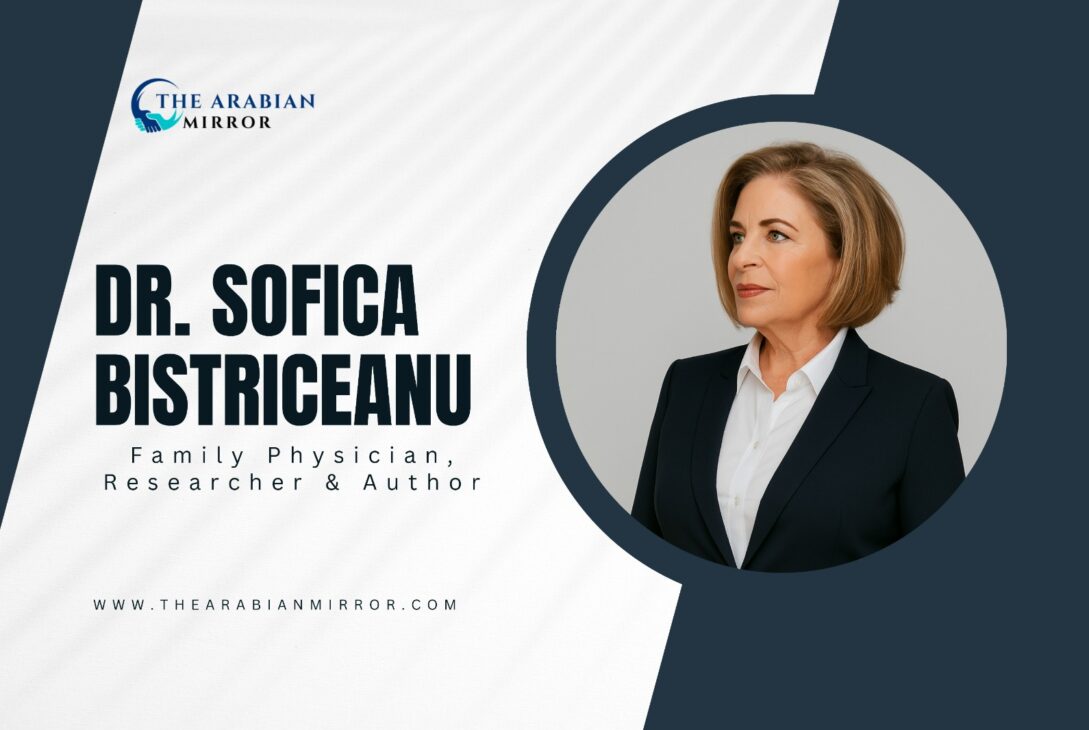
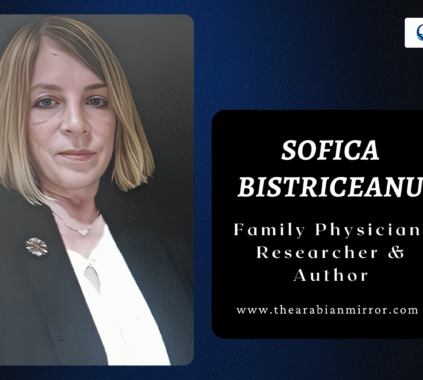
We recently had the privilege of interviewing Dr. Sofica Bistriceanu (MD), a distinguished family physician, researcher, and poet whose work sits at the intersection of medicine, communication, and human behaviour. With decades of experience in clinical practice, Dr. Bistriceanu has built a multidisciplinary career shaped by scientific inquiry, compassionate care, and a deep interest in the many factors that influence health and well-being.
Recognised internationally for her contributions to family medicine and research, Dr. Bistriceanu has presented her work across global medical forums and earned recognition for her studies on communication and its impact on human health. Beyond medicine, she is also the author of seven volumes of poetry, bringing a rare blend of clinical expertise and literary depth to her work. In this conversation, she reflects on the defining moments of her journey, the challenges that shaped her path, and the ideas that continue to guide her work today.
The Calling Behind the Career
We began by asking Dr. Bistriceanu, “What first inspired you to enter the field of family medicine, and how has your approach evolved over time?”
“Family medicine offered something uniquely valuable to me. It gave me the opportunity to observe patients and families over time and better understand the many forces that shape health across generations. From genetics and education to social environment, technology, and everyday human interaction, I was drawn to the broader context in which health is formed and influenced.
That long-view perspective eventually shaped my medical philosophy and led to the development of my medical home model, a private practice approach designed to deliver more holistic and personalised care. For me, this model allows patients, especially seniors and those with limited mobility, to receive medical care in a setting that is both practical and comfortable.
I also believe physicians have a broader responsibility within society. Healthcare professionals should work closely with communities to promote education, awareness, and healthier communication practices, particularly for vulnerable groups whose well-being is often shaped by environmental and interpersonal stressors.”
Building Through Resistance
Like every meaningful professional journey, Dr. Bistriceanu’s path has come with its share of challenges.
When asked, “What has been one of the most defining challenges in your leadership journey?” she reflected thoughtfully.
“One of the most defining challenges in my leadership journey was implementing the medical home model as a private practice. Introducing a new care model required not only clinical confidence, but also the ability to build trust, prove outcomes, and create long-term sustainability in a system often resistant to change.
Patients value more than treatment alone. They pay attention to accessibility, communication, wait times, affordability, and the overall quality of care. For that reason, I viewed the medical home model not only as a clinical shift, but also as a practical and human-centred response to patient needs.
Sustaining growth in medicine also requires continuous learning. Over the years, I have remained deeply engaged with international academic and medical platforms to stay connected with new ideas, emerging research, and evolving medical discourse.”
Milestones That Shaped the Journey
Reflecting on her achievements, we asked, “Can you share some milestones that have shaped your journey across medicine, academia, and research?”
“My first international presentation came in 2002 at the WONCA Europe Conference in London, where my work was selected for discussion. From there, my research continued to gain recognition on global platforms.
In 2006, a poster based on my doctoral thesis was presented at the Annual Meeting of NAPCRG in Tucson, Arizona, where it received a perfect rating for excellence among more than 200 entries. That same year, I was awarded Most Creative Storyboard at the NICHQ Annual Forum in Orlando.
Over the years, I have received multiple distinctions for my research and presentations, including a Certificate of Excellence, a Service Quality Award, Best Speaker Presentation, Best Poster Award, and several international recognitions across healthcare, communication, and clinical research forums.
Among my most meaningful contributions has been my research into the effects of communication on vulnerable individuals, a theme that has remained central to my work.”
On Leadership and Responsibility
To understand her leadership philosophy, we asked, “What qualities do you believe are essential for becoming a successful leader?”
“Leadership requires awareness, responsibility, and human respect. It means being consistent in daily action, open to new ideas, respectful of the contributions of others, and willing to lead with honesty, kindness, and accountability.
For me, leadership is not simply about authority. It is about earning trust through conduct and creating an environment where people feel respected, supported, and motivated to do meaningful work.”
Measuring Meaningful Impact
On measuring professional effectiveness, we asked, “How do you assess the efficiency and impact of your work?”
“One of the clearest indicators of professional effectiveness is the attitude of patients and collaborators. Respect, trust, loyalty, and genuine appreciation often reveal more about the quality of care than metrics alone.
Long-term patient relationships offer one of the most honest reflections of impact. When families return across generations, when patients recommend care, and when children leave with trust and comfort, those responses become powerful indicators of meaningful work.
For me, human response remains one of the most reliable measures of professional performance.”
Where Research Meets Practice
Innovation has played a defining role in Dr. Bistriceanu’s work. To explore this, we asked, “Have you introduced any research-led or innovative approaches that set your practice apart?”
“Much of my work has focused on communication and its physiological impact on human health. Over the years, I have explored how repeated negative verbal and non-verbal interactions may influence stress, blood pressure, chronic illness progression, and overall vulnerability.
This research has informed multiple presentations across international conferences and remains one of the most distinctive aspects of my academic work.
I have also explored lower-cost diagnostic models, remote clinical observation methods, and the role of behavioural indicators in digital healthcare settings. My work continues to focus on integrating observation, communication, and clinical science into more responsive care models.”
Perspective on Women and Leadership
As a woman in leadership, Dr. Bistriceanu also shared her perspective when we asked, “How do you view the role of women in today’s society?”
“The role of women in society has evolved significantly. Women are increasingly stepping into leadership roles and making meaningful contributions across sectors.
In many cases, women bring a heightened sensitivity to emotional cues and human dynamics, qualities that can strengthen communication, deepen trust, and improve outcomes in professional environments.
These strengths are especially valuable in fields that rely on empathy, connection, and human understanding.”
What Comes Next
Turning to the future, we asked, “What are your key priorities in the years ahead?”
“One of my key interests moving forward is exploring the impact of cultural differences on people’s lives and well-being.”
A Note to Today’s Professionals
To conclude, we asked, “What advice would you offer professionals striving for long-term success?”
“Pay attention to burnout. In demanding professions, burnout can quietly erode years of hard work, which is why self-awareness and sustainable balance are essential for long-term effectiveness.”
The Human Side of Business
On maintaining trust and engagement, we asked, “What strategies do you believe are essential for sustaining client satisfaction and professional trust?”
“Competence, fair pricing, respectful communication, compassion, and professionalism are essential. Long-term trust is built not only through expertise, but through the quality of human interaction and the consistency of care.
Sustainable success comes from delivering value with integrity and treating people with dignity.”
Defining a Lasting Legacy
Finally, we asked, “How would you like your work to be remembered?”
“I hope my work is remembered for contributing something meaningful, not only through patient care, but through ideas that expand how medicine is understood and practiced.
Medicine must be approached as a whole, connected not only to the body, but to behaviour, communication, and the human experience.”
Connect with Dr. Sofica Bistriceanu on LinkedIn.
Also Read:-
Volkan Çalışıyor — Redefining Design Through Strategy, Technology & Multidisciplinary Thinking
Dr. Hussein Almuhtaseb: A Visionary Leader In Modern Ophthalmology





















[…] Dr. Sofica Bistriceanu: Bridging Medicine, Research, And Human Connection […]
[…] Dr. Sofica Bistriceanu: Bridging Medicine, Research, And Human Connection […]
[…] Dr. Sofica Bistriceanu: Bridging Medicine, Research, And Human Connection […]
[…] Dr. Sofica Bistriceanu: Bridging Medicine, Research, And Human Connection […]